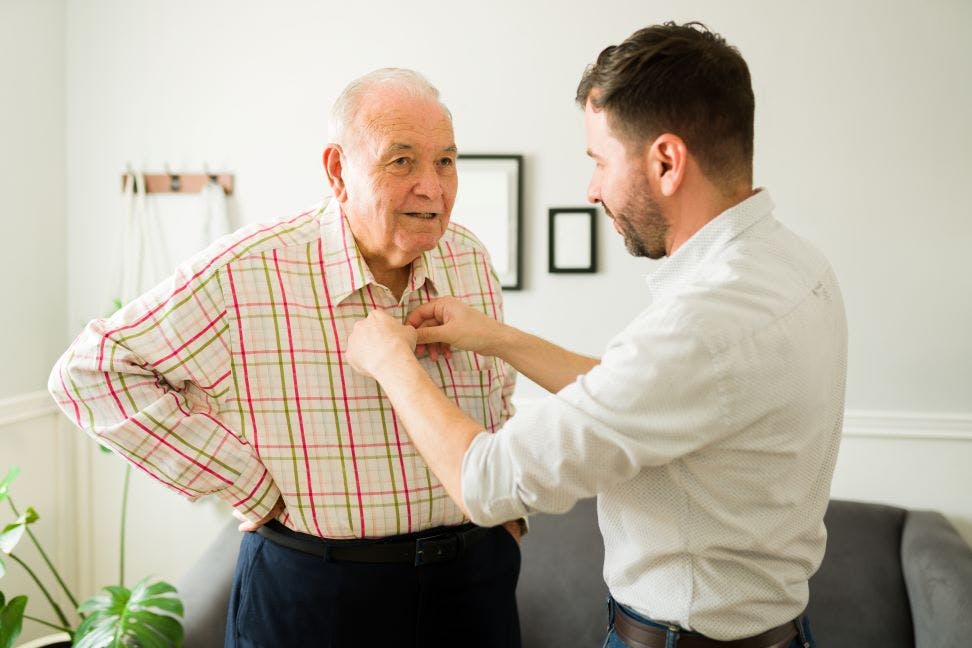
How Mark secured CHC for his father, Peter
Mark successfully secured NHS Continuing Healthcare funding for his father, Peter, who was living with dementia, although the journey to get there was far from straightforward. Compass CHC guided Mark through the often opaque and overwhelming system, providing the expert advocacy they needed to secure the funding Peter was entitled to – support they would have struggled to access without Compass’ counsel.
As Peter’s condition worsened, Mark took on increasing responsibility for his care and finances. He made the decision to move Peter into a private nursing home at a cost of £7,000 a month, funded through the sale of his father’s house, knowing the money would only last a few years. The fear of a funding gap before local authority support could step in was a constant worry.
Like many families, Mark was initially unaware CHC funding existed, or how to access it. Over the course of two years and two full assessments, he came to understand the importance of timing, evidence, and having the right expertise on your side. With Compass CHC’s support having someone in the room who understood the system made all the difference.
The continuing healthcare process – first assessment
Mark’s first steps into the CHC system came in 2021. With Peter’s health deteriorating and care costs rising, he began investigating what support might be available. Despite finding references to CHC online, the system felt fairly opaque. He attempted to make a claim on his own, believing that Peter’s dementia diagnosis and daily care requirements would be sufficient.
In hindsight, Mark now recognises that his father’s primary health needs may not have been strong enough during the first application. But without any advice or guidance, there was no one to help him assess whether it was the right time to apply. The process also demanded a specific type of evidence and documentation that Mark, as a family member and layperson, had no training to provide. Ultimately the first claim was unsuccessful.
Second assessment
Nearly two years later, Peter’s condition had changed significantly. At this point, Mark decided to make a second application. Recognising the stakes, Mark sought independent support from Compass CHC – experts in navigating CHC eligibility and securing fair outcomes. Compass CHC’s input meant Peter’s case was no longer just another file, it became a fully evidenced, clearly articulated demonstration of need. Mark knew, from prior experience, that he needed someone on his side who understood the detailed requirements of primary health needs in order to maximise their chances.
With Compass CHC’s support, the second application was approached entirely differently. Their team took on the burden of gathering detailed evidence, contacting all the relevant medical and care professionals involved in Peter’s care, then cross-referencing that information against the National Framework to identify where a primary health need could be established. This was compiled into a comprehensive expert report for the assessment. Mark also opted for Compass’s advocacy service, meaning he had professional representation during the assessment meeting itself. The advocate was able to present the case, challenge scoring where needed, and ensure Peter’s needs were properly recognised.
The NHS team leading the second assessment was noticeably more structured, and this time, the assessment itself resulted in a successful outcome. Mark recalls that the Compass CHC advocate’s input during the scoring made a real difference, clarifying points when the assessors were uncertain and ensuring Peter’s needs were accurately reflected. The decision to award CHC funding was made during the meeting.
After the decision
One of Mark’s biggest concerns had been whether the NHS would require Peter to move care homes. That didn’t happen. The transition into NHS-funded care was seamless, something Mark described as “hugely reassuring” during an already stressful time.
But it wasn’t just about the funding. Mark noticed a marked increase in the level of interest and oversight after CHC was granted. A coordinated and knowledgeable NHS care team began making both scheduled and unannounced visits. He was contacted regularly by two named senior nurses from the local Trust, who helped monitor Peter’s care and provided Mark with a consistent point of contact.
The financial relief was important, but it was these regular check-ins, the professional accountability, and the emotional burden being shared that he found most transformative. As he put it, these were “intangible benefits” that lifted a huge weight off his shoulders.
Mark’s reflections
Looking back, Mark believes the outcome of the second application was shaped by two things: worsening need, and better-informed support. He’s clear that had he contacted Compass CHC earlier and been better advised at the start, he might have avoided the stress and disappointment of the first claim.
He also came to see how poorly understood the CHC process is, not only by families, but often by care homes as well. Important indicators of primary health needs such as falls, cognition, behavioural needs, and supervision were well managed by the care home, but become thought of as routine, and over time, stopped being recorded in care notes. These needs still existed, but had become so normalised that they no longer stood out on paper.
Mark was always comfortable with the level of care provided by the care home, and understood that when you see a resident all day, every day, you can become accustomed to their day-to-day events. As Mark later reflected, Compass CHC played a crucial role in drawing out these underlying needs and ensuring they were considered by the NHS CHC team when making their decision. In his words, they helped surface primary health issues that were clearly present anecdotally but had stopped being documented.
Mark now believes families would benefit greatly from clearer guidance, not just about what CHC is, but about when it’s appropriate to apply, and what sort of evidence really matters. He stresses the importance of knowing when not to apply too early, and of recognising that successful applications aren’t just about need, they’re about timing, language, and preparation.
Conclusion
Mark’s experience highlights what many families face: a system that is difficult to understand, with little guidance and no margin for error. For Mark, having an expert on his side made the difference, not just in securing funding, but in ensuring his father received the care, oversight, and dignity he deserved. Compass CHC was by his side every step of the way.
Looking back, Mark advises others to seek specialist input early. In his view, having an expert involved can either stop you from applying too soon or help you build a stronger, more accurate case when the time is right. As he put it, doing so can “properly advance your claim and maximise your chance of success.”
Learn more: How expert advocacy helped Helen’s family secure the funding they deserved
Unsure if you or a loved one qualifies?
If you think you or a loved one may be eligible for CHC funding, don’t delay. We’re here to guide you through every step.
Submit an enquiry to get started.